
Published on Digital Dominarx | Category: Search Engine Marketing | Reading Time: ~10 minutes
If you’ve ever stared at a blank Google Analytics dashboard wondering why your competitors are ranking on page one while your site sits somewhere in the digital void — you’re not alone. I’ve been there. Most marketers have
The truth is, good search engine marketing (SEM) is less about luck and more about having the right tools in your corner. And in 2025, the SEM tools landscape has never been more powerful — or more overwhelming.
So let’s cut through the noise. This guide walks you through the best search engine marketing tools you actually need — covering everything from paid ads and keyword research to backlink analysis and interlinking strategies that genuinely move the needle.
What Is Search Engine Marketing (And Why Do the Right Tools Matter)?
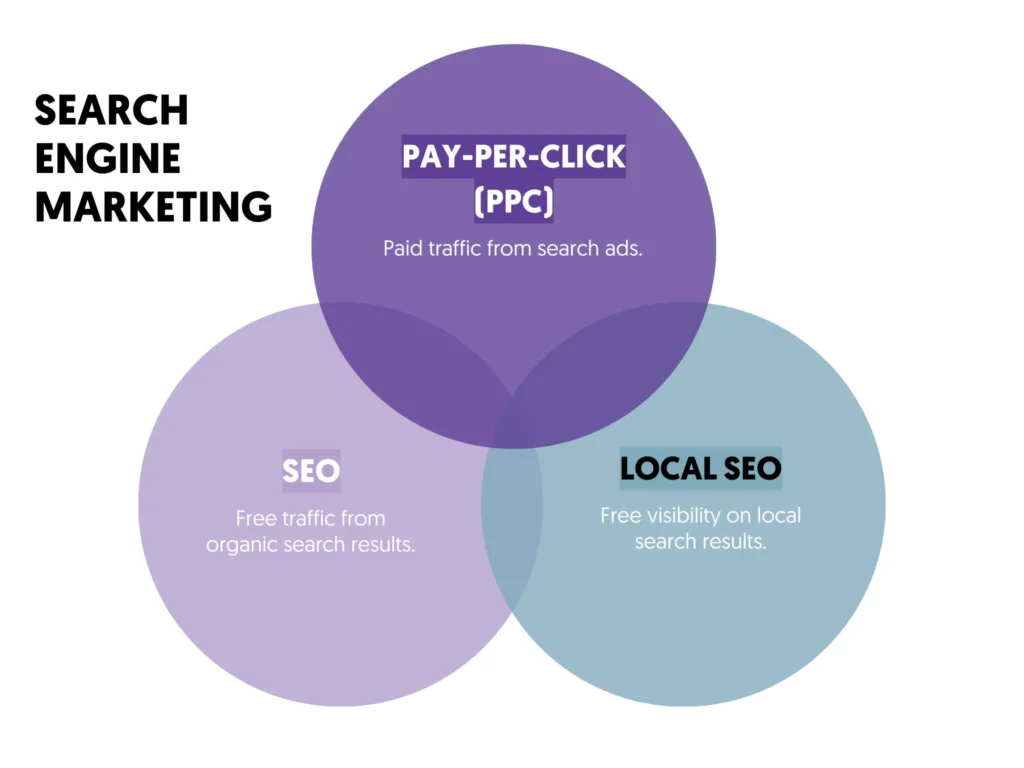
Search Engine Marketing is a broad umbrella. It covers both SEO (Search Engine Optimization) — getting organic rankings — and PPC (Pay-Per-Click advertising) — getting paid visibility on platforms like Google and Bing.
When people talk about SEM tools, they usually mean software that helps you:
- Research keywords people are actually searching for
- Run and optimize paid ad campaigns
- Build and analyze backlinks to increase domain authority
- Track where your traffic is coming from
- Create internal linking structures that help Google understand your site’s depth
The right set of tools can mean the difference between burning your entire monthly budget on ads with zero ROI — and running a lean, high-converting campaign that brings in qualified leads every single day.
💡 Quick Tip: You don’t need 10 different tools. You need the right 4–5 used consistently. More on that below.
1. Google Ads — The Backbone of Paid Search Marketing
Let’s start with the obvious one. Google Ads is the foundation of any serious paid SEM strategy. Whether you’re running Search Ads, Display campaigns, or Performance Max — this is where most SEM budgets live and where results happen fastest.
What makes it powerful:
- Keyword-level bidding control so you only pay for what matters
- Granular audience targeting by location, device, intent, and demographics
- Conversion tracking that integrates directly with Google Analytics
- Responsive Search Ads that automatically test multiple headlines
What most businesses get wrong: They set up a campaign, hit “go,” and forget about it. Google Ads rewards active management — pruning negative keywords weekly, adjusting bids for top-performing ad groups, and continuously testing new ad copy.
Now here’s something a lot of small business owners miss — Google Ads isn’t just for big brands with massive budgets. In fact, the platform is specifically designed to be cost-effective for smaller advertisers. If you’re curious about this, we’ve done a deep dive on the advantages of Google AdWords for small business and the benefits of using Google Ads for small businesses — both worth reading before you launch your first campaign.
2. Google Search Console — Your Free SEO Power Tool
Before you spend a single rupee on paid tools, make sure you’ve squeezed every bit of value from Google Search Console. It’s free, it’s direct from Google, and most marketers barely scratch the surface of what it can do.
What you can do with it:
- See exactly which search queries are bringing impressions and clicks to your site
- Identify pages with high impressions but low CTR (these are goldmines for quick wins)
- Submit your sitemap and monitor indexing status in real time
- Spot crawl errors before they silently tank your rankings
The hidden gem inside Search Console: The Performance report broken down by Page + Query shows you which specific pages rank for which keywords. This becomes your internal linking strategy map — you know what’s already working, so you build links toward those pages from your other content.
3. SEMrush — The All-in-One SEM Workhorse
If you’re serious about search marketing, SEMrush is probably the most complete platform available today. Yes, it’s paid — but the ROI for active users is genuinely worth it.
Key features for SEM practitioners:
- Keyword Magic Tool — Find thousands of keyword variations with volume, difficulty, and CPC data all in one place
- Advertising Research — Spy on competitor ad strategies and see the exact keywords they’re bidding on
- Backlink Analytics — Analyze any domain’s full backlink profile
- Position Tracking — Monitor your daily keyword rankings for target terms
- Site Audit — Catch technical SEO issues that could be quietly hurting your rankings
Real-world use case: Say you’re running Google Ads for a local business in Gurgaon. Instead of bidding on broad expensive terms, SEMrush helps you find high-intent, lower-competition keywords that convert better. Speaking of which — if you’re looking for hands-on campaign management, check out what our advertising agency in Gurgaon offers for local businesses.
4. Ahrefs — The Gold Standard for Backlink Intelligence
Ask any serious SEO professional which single tool they’d keep if they had to choose one, and a large percentage will say Ahrefs. It earned that reputation primarily through its backlink data, and it’s only gotten better.
Why backlinks still matter deeply in 2025:
When a high-authority website links to yours, Google treats it as a trust signal. The more quality backlinks you accumulate, the more domain authority you build — and the easier it becomes to rank competitively.
Ahrefs’ standout features:
- Site Explorer — See every backlink pointing to any domain, including your competitors’
- Content Explorer — Find the most linked-to content in any niche, fast
- Keywords Explorer — Deep keyword research with full SERP breakdown
- Broken Link Checker — Find broken links on competitor sites you could replace
- Rank Tracker — Monitor keyword movement over time for your domain
Backlink strategy using Ahrefs (step-by-step):
- Enter a competitor’s domain into Site Explorer
- Filter backlinks by Domain Rating 40+
- Identify which content is attracting those links
- Create something more thorough, more updated, more visual
- Reach out to the same linking sites with your improved resource
This is the Skyscraper Technique — and it still works consistently when executed properly.
5. Google Keyword Planner — Free, Direct, and Underused
Most people who use paid tools completely forget that Google Keyword Planner exists. But for PPC campaigns specifically, it remains invaluable because the data comes directly from Google — not third-party estimates.
Best use cases:
- Getting realistic CPC estimates for setting ad budgets
- Discovering new keyword ideas based on your landing page content
- Understanding seasonal search trends before planning campaign timing
One catch: Keyword Planner shows volume in ranges unless you have active spend in your Google Ads account. Run even a small test campaign — ₹500 to ₹1,000 — and the exact monthly volume numbers unlock immediately.
6. Moz Pro — Built for Local SEO and Link Analysis
Moz Pro sits in a sweet spot between Ahrefs and SEMrush. It has a cleaner interface for beginners and is particularly strong for local SEO — which makes it especially relevant for businesses targeting city-specific searches.
Features worth using:
- Link Explorer — Analyze backlinks and get Domain Authority (DA) scores
- Keyword Explorer — Research with Moz’s “Priority” score that weighs volume, difficulty, and opportunity together
- On-Page Grader — Get page-level recommendations for targeting specific keywords
- Local SEO Tools — Ensure your business shows up in local map packs and location-based results
For businesses in competitive local markets — whether you’re an SEO agency in Gurgaon or a local retailer trying to show up in “near me” searches — Moz’s local tools are particularly well-suited to the task.
7. Ubersuggest — The Budget-Friendly Research Option
Not every business has the budget for full SEMrush or Ahrefs subscriptions. If you’re a freelancer, a startup, or managing tight client budgets, Ubersuggest by Neil Patel is a solid entry point.
What you get:
- Keyword suggestions with volume, CPC, and difficulty scores
- Competitor domain overview and traffic estimates
- Basic backlink data and referring domains
- Content ideas based on what’s already performing in your niche
- A site audit on the free tier (limited but useful)
It won’t replace Ahrefs for deep link analysis — but for quick keyword research and competitive benchmarking, it’s excellent value for the price.
8. SpyFu — Know Exactly What Your Competitors Are Spending On
SpyFu does one thing exceptionally well: competitor intelligence for PPC campaigns.
Enter any competitor’s domain and SpyFu reveals:
- Every keyword they’ve ever bought ads for on Google
- Their estimated monthly PPC spend
- Their best-performing ad copy (with historical versions going back years)
- Their organic ranking history alongside paid activity
If you’re in a competitive vertical — real estate, education, e-commerce, automotive — this kind of intelligence is worth its weight in ad spend saved. You see what messaging is already working in the market before you write your first ad.
How to Choose the Right Agency or Partner for Your SEM Campaigns
Tools are powerful, but using them well takes experience and consistent attention. Many businesses — especially small and medium-sized ones — get better results working with a specialist rather than managing everything in-house.
If you’re evaluating your options, it helps to know what to look for. We’ve put together a practical advertising agencies buying guide that walks you through exactly what questions to ask, what red flags to watch for, and how to evaluate whether an agency is the right fit for your growth goals.
And if you’re specifically looking for local expertise, our best SEO company in Gurgaon page covers how we approach SEO campaigns for businesses in the Delhi NCR market.
Understanding Backlinks: The Currency of SEO Authority
We’ve referenced backlinks throughout this guide — now let’s look at the full picture of why they matter and how to build them the right way.
What Makes a Backlink Genuinely Valuable?
Not all backlinks carry equal weight. Here’s what separates a powerful link from a meaningless one:
High-value backlinks come from:
- High Domain Authority websites (DA 40+)
- Sites that are topically relevant to your industry
- Pages that already attract their own organic traffic
- Editorial mentions — links placed naturally within content, not paid insertions
- .edu and .gov domains where contextually appropriate
Backlinks to avoid at all costs:
- Link farms and Private Blog Networks (PBNs)
- Paid links that violate Google’s Webmaster Guidelines
- Irrelevant, low-quality directories with no real traffic
- Comment spam across random forums and blogs
Practical Backlink Building Strategies That Work in 2025
Guest Posting: Write genuinely useful content for respected industry blogs. Focus on publications your target audience actually reads — not just any site that accepts guest posts.
Digital PR: Get your brand cited in news articles, industry roundups, or research pieces. Tools like HARO (Help a Reporter Out) connect you directly with journalists seeking expert sources.
Resource Link Building: Create assets other sites want to link to — calculators, research studies, comprehensive guides, free templates. Passive link magnets that keep earning over time.
Broken Link Building: Use Ahrefs to find broken external links on relevant sites, then suggest your content as the replacement. It’s helpful for them and earns you a quality link.
Testimonials: Write genuine testimonials for tools and services you use. Many companies link back to the testimonial giver’s website — easy wins from brands you already trust.
Internal Linking: The Underrated SEO Strategy Most Sites Ignore
Here’s a fact that surprises a lot of marketers: internal links — links between pages within your own website — are one of the most underused and highest-leverage SEO tactics available. And they cost absolutely nothing.
Google uses internal links to:
- Discover new pages it hasn’t yet indexed
- Understand the relationships between your content pieces
- Distribute link equity (PageRank) intelligently across your site
A well-planned internal linking structure can push a page up in rankings without a single new external backlink. That’s powerful.
Internal Linking Best Practices (That Actually Work)
Use descriptive, keyword-rich anchor text. Never “click here.” Instead use something like “learn how Google Ads benefits small businesses” — this tells both Google and the reader exactly what they’ll find on the linked page.
Link deep into your site, not just to the homepage. Most sites over-link to their homepage and ignore deeper content pages. Think strategically about which blog posts, service pages, or guides you want to rank — then actively build links toward those pages from related content.
Build a pillar-cluster structure. This is the modern content architecture that Google rewards:
- A pillar page covers a broad topic comprehensively (like this guide on SEM tools)
- Cluster pages dive deep on specific subtopics (like our posts on Google Ads benefits or choosing the right agency)
- Every cluster page links back to the pillar — and the pillar links out to all clusters
This signals topical authority to Google in a way scattered content simply cannot.
Hunt down orphan pages. An orphan page is one with zero internal links pointing to it. Google struggles to find it, and it almost never ranks. Use Screaming Frog (free up to 500 URLs) to identify and fix these on your site.
Don’t go overboard. A page stuffed with 80+ internal links dilutes the value of each one. Be selective — every internal link you include should genuinely help the reader go deeper on something relevant.
Building Your SEM Tool Stack: A Budget-Based Recommendation
You don’t need to subscribe to every tool in this guide. Here’s a practical stack based on where you are right now:
Starter Stack — Free / Minimal Cost
- Google Search Console (Free)
- Google Keyword Planner (Free with Google Ads account)
- Ubersuggest (Free tier / Low cost)
- Google Analytics 4 (Free)
Growth Stack — Mid Budget
Everything above, plus:
- SEMrush or Ahrefs (₹8,000–₹15,000/month)
- Screaming Frog SEO Spider (Free up to 500 URLs)
- SpyFu (for competitive PPC intelligence)
Advanced Stack — Agency / Serious Marketer
Everything above, plus:
- Moz Pro for local SEO and DA tracking
- HubSpot or a CRM for tracking leads beyond Google Ads conversions
- Dedicated landing page tools (Unbounce, Instapage) for conversion optimization
Final Thoughts: Tools Are Only as Good as the Strategy Behind Them
Here’s the honest reality: the best SEM tool in the world won’t rescue a bad strategy. These platforms give you data, speed, and leverage — but the decisions, the messaging, and the consistency still come from you.
Start with Google Search Console and Google Keyword Planner. Get comfortable with the fundamentals — understanding search intent, structuring logical ad campaigns, writing copy that speaks to real people with real problems. Then layer in tools like SEMrush or Ahrefs as your business and budget grow.
And remember — whether it’s backlinks or internal links — you’re not just optimizing for an algorithm. You’re building trust signals that tell both Google and your audience: “This content is worth reading. This business is worth working with.”
That’s what search engine marketing, done right, is really about.
Frequently Asked Questions
Q: Which is better — SEMrush or Ahrefs? Both are excellent, but they have different strengths. SEMrush is stronger for PPC research and content marketing workflows. Ahrefs is the best available tool for backlink analysis and link building. If you’re focused primarily on organic SEO, go Ahrefs. If you run paid campaigns too, SEMrush makes more sense as your single platform.
Q: How many backlinks do I actually need to rank? There’s no fixed number — it depends entirely on the competition in your niche. Use Ahrefs’ Keywords Explorer to check the average backlink count of the pages currently ranking in the top 10 for your target keyword. That’s your realistic benchmark.
Q: Can I do effective SEM without paid tools? Absolutely. The free stack — Search Console, Analytics 4, and Keyword Planner — can take a focused marketer surprisingly far, especially in local or niche markets with manageable competition levels.
Q: How often should I audit my backlinks? At minimum, quarterly. Monthly if you’re in an active link-building campaign or a high-competition space. Start with Google Search Console’s “Links” report for a free baseline, then go deeper with Ahrefs for detailed analysis.
Q: Do I need an agency or can I manage SEM in-house? Depends on your time, team, and budget. In-house gives you control; an agency gives you expertise and speed. If you’re evaluating options, our advertising agencies buying guide will help you make a more informed decision.
Found this guide useful? Bookmark it for later or share it with your team. If you’re looking for expert SEM support in Delhi NCR, explore our services at digitaldominarx.in.